Innovation & Entrepreneurship
The Vanderbilt Department of Otolaryngology–Head and Neck Surgery has a longstanding tradition of innovation in patient care, education, research and program development. Since the founding of the modern department in 1986, successive generations of faculty and leaders have embraced new approaches to improving the health, quality of life and patient experience.
Our Innovation & Entrepreneurship Program builds on this tradition, bringing together residents, faculty, alumni and innovators from across the country to identify unmet needs and develop new devices, technologies, programs and approaches to care. The program draws on Vanderbilt's rich interdisciplinary environment, including collaborations with the Vanderbilt Institute for Surgery and Engineering, the Wond’ry, the Brock Center and the Center for Technology Transfer and Commercialization.
Education is central to our mission. Vanderbilt Otolaryngology residents participate in a longitudinal curriculum in innovation, entrepreneurship and commercialization, developing practical skills in identifying unmet needs, evaluating potential solutions and understanding pathways from concept to implementation. Residents put these skills into practice by evaluating proposals and participating in the selection of recipients for the Department's two endowed innovation awards: the Haynes Scholar Award and the Dr. Keith Matheny Innovation & Entrepreneurship Award. Together with their associated annual symposia, these awards recognize promising innovators, foster collaboration and provide residents with firsthand experience assessing new ideas from clinical, scientific, and commercial perspectives.
The Haynes Scholar Award
The Haynes Scholar Award, named in honor of Prof. David Haynes, was established in 2024 through the generosity of Herbert Christopher to recognize and encourage innovation among the next generation of otolaryngologists.
Mr. Christopher has been an important supporter of the Department and of programs that advance discovery, education and patient care. In addition to establishing the Haynes Scholar Award, his philanthropy has supported leadership in Alzheimer's disease research and advanced training in otologic surgery.
Current Otolaryngology–Head and Neck Surgery residents from programs nationwide are invited to submit a novel invention, program or process with the potential to meaningfully advance the education or practice of our specialty. We welcome a broad range of ideas and perspectives.
Vanderbilt Otolaryngology residents participate in reviewing the applications and selecting the Haynes Scholar, giving them the opportunity to critically evaluate emerging innovations from their peers around the country.
The selected Haynes Scholar travels to Nashville to present their work to the Department and Vanderbilt Health community and to meet with residents, faculty and members of Vanderbilt's broader innovation community. The Scholar receives a $1,000 honorarium and is recognized at a celebratory dinner. Additional outstanding applicants may be selected for Honorable Mention and invited to present their work virtually as part of the Haynes Innovation Symposium.
The 2026 award cycle is now open. Apply for the Haynes Scholar Award.
Haynes Award Selection Committee
- Chair: Alexander Langerman, MD, SM, FACS – Professor, Head and Neck Surgery
- Naweed Chowdhury, MD – Assistant Professor, Division Chief, Rhinology
- Austin Hoke, MD – PGY 5 Resident
- David Kent, MD – Assistant Professor, Sleep Surgery
- Stephanie Kim, MD – PGY 3 Resident
- Christine Little, MD – PGY 4 Resident
- Nathaniel Verhagan, MD – PGY 2 Resident
- Lyndy Wilcox, MD – Associate Professor, Pediatric Otolaryngology
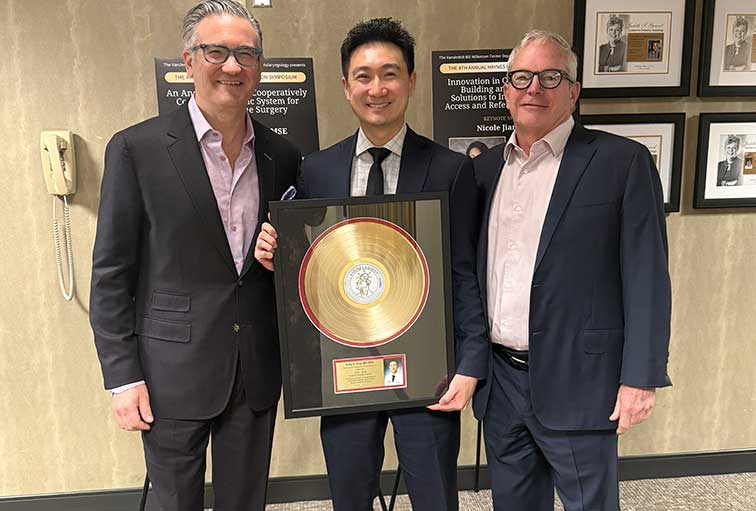
Pictured: Dr. Alexander Langerman; 2025 Haynes Scholar Dr. Andy Ding from Johns Hopkins in Baltimore, MD;
and Dr. David Haynes
The Dr. Keith Matheny Innovation & Entrepreneurship Award
Established in 2026, the Dr. Keith Matheny Innovation & Entrepreneurship Award builds upon the Department's innovation program with a particular focus on the next challenge: translating promising ideas into solutions that can succeed in practice.
The award is named for Keith Matheny, MD, FARS, an alumnus of the Vanderbilt Otolaryngology residency program, practicing otolaryngologist, inventor and serial entrepreneur. Dr. Matheny credits his training at Vanderbilt as an important foundation for his subsequent career and established the award to help prepare future physicians to innovate and lead in a changing health care environment.
Each fall, the Matheny Award will recognize an otolaryngology faculty member from a U.S. institution who is developing an early-stage venture or other innovation with significant potential for translation and commercialization.
The selection process is also an important component of resident education. Working with Dr. Matheny and Vanderbilt faculty mentors, residents evaluate submitted proposals from both clinical and commercialization perspectives. They consider the importance of the unmet need and proposed solution alongside factors such as customer discovery, adoption, market opportunity, business model and pathways to implementation. Residents then participate directly in selecting the Matheny Innovation Scholar.
In this way, the Matheny Award has a dual purpose: to advance promising physician-led innovations and to give Vanderbilt residents practical experience evaluating how good ideas become sustainable, real-world solutions.
Additional details regarding the inaugural Matheny Award will be announced as the program develops.
Innovation Symposia
The Department hosts two complementary symposia that bring residents and faculty together with innovators, entrepreneurs and experts from across health care.
Spring — The Haynes Innovation Symposium
The annual Haynes Innovation Symposium explores the development of new ideas in otolaryngology and the pathways by which they can improve clinical care.
The symposium features presentations from the Haynes Scholar and Honorable Mention recipients, with discussion and feedback from experts in innovation, entrepreneurship, commercialization and technology transfer. It provides emerging innovators an opportunity to share their work while giving residents and faculty a practical forum for examining how new ideas develop and mature.
The symposium concludes with a keynote presentation from a faculty member from another institution who is a leader in health care innovation.
Past Haynes Symposia Keynote Speakers
- Jan Rieger, PhD, University of Alberta. Straddling the Divide of Academia and Entrepreneurship
- Nilesh Vasan, MD, University of Oklahoma. Medical Device Adoption
- James Daniero, MD, University of Virginia. Building Bridges not Barriers: Exploring Unmarked Trails of Medical Innovation.
- Nicole Jiam, MD, University of California – San Francisco. Innovation in Otolaryngology: Building and Scaling AI Solutions to Improve Patient Access and Referral Intelligence
Fall — The Matheny Innovation & Entrepreneurship Symposium
The inaugural Matheny Innovation & Entrepreneurship Symposium is planned for Fall 2027.
Complementing the Haynes Innovation Symposium, the Matheny Symposium will focus more specifically on entrepreneurship, commercialization and the practical challenges of moving health care innovations toward implementation and sustainable real-world adoption.
Additional details regarding the program, speakers and format will be announced as planning progresses.
Program Leadership
The Department’s Innovation & Entrepreneurship Program is directed by Alexander Langerman, MD, SM, Professor of Otolaryngology–Head and Neck Surgery. Dr. Langerman leads the program’s efforts in innovation education and mentorship, and the development of initiatives that connect residents and faculty with the broader health care innovation and entrepreneurship community.
-
- Applications for the 2026 award cycle are due by midnight CST on November 13th, 2026. The application form can be found here.
- Title of Project
- Introduction: Please describe the problem you are solving (limit 25 words).
- Description: Please describe your innovation (limit 450 words). You may upload a one-page PDF with images as part of this section. Note: please limit response to non-confidential information only.
- Overall Impact and Future Directions: Please describe the actual and/or potential impact of your innovation and the future steps you hope to take to develop it further (limit 300 words).
- Role: Please describe your specific role in developing this innovation (limit 150 words).
- Presentations and Funding: Please list key presentations and pitches you've made on your innovation, as well as any funding you've applied for or secured to support the development of your innovation (limit 150 words).
- Please list your primary mentor or other key individuals who contributed to this innovation and their titles and institution.
- Applicants will also need to upload a letter of support from their department chair. This letter must include the following information:
- Certification of good standing as a resident in the department
- Confirm role of resident in developing the innovation
- Agreement permits the applicant to travel to Vanderbilt as a visiting scholar for up to three days and release from residency duties during that time. Matched medical students will need a letter from their matched institution department chair. The visit to Vanderbilt will coincide with the Haynes Innovation Symposium in early Spring 2026.
- Winner will be announced in December 2026.
- Applicants can direct questions to LaJoy Freeman (lajoy.freeman@vumc.org)
- Applications for the 2026 award cycle are due by midnight CST on November 13th, 2026. The application form can be found here.
-
The Haynes Innovation Symposium is a yearly virtual conference celebrating the Haynes Scholar and honorable mention awardees while providing practical insights to aspiring innovators on the strategies and pathways towards commercialization and dissemination. The symposium kicks off with a “grand rounds” address by the Haynes Scholar, followed by quickshot presentations by the honorable mention awardees. During these presentations, a discussant panel of experts in innovation, commercialization, entrepreneurship, and tech transfer provide commentary and questions to enhance the educational value for attendees. The symposium ends with a keynote address by a leader in innovation.
-
Congratulations to the winners of this year’s Haynes Award for Innovation in Otolaryngology-Head and Neck Surgery. The 2025 Haynes Scholar is Dr. Andy Ding from Johns Hopkins Medicine, and he will join us for a visit on May 1, 2026, to present his work as part of the 4th Annual Haynes Innovation Symposium.
4th Annual Haynes Scholar
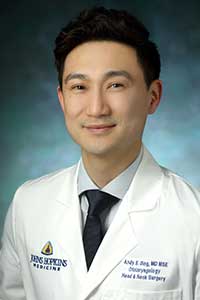
Dr. Andy Ding
Johns Hopkins Medicine
-
Congratulations to the winners of this year's Haynes Award for Innovation in Otolaryngology–Head and Neck Surgery! We are delighted to announce that Dr. Obinna Nwosu from Mass Eye and Ear was chosen as our 3rd Annual Haynes Scholar and will join us for a campus visit on April 25, 2025, to present his work as part of our annual Haynes Innovation Symposium.
3rd Annual Haynes Scholar
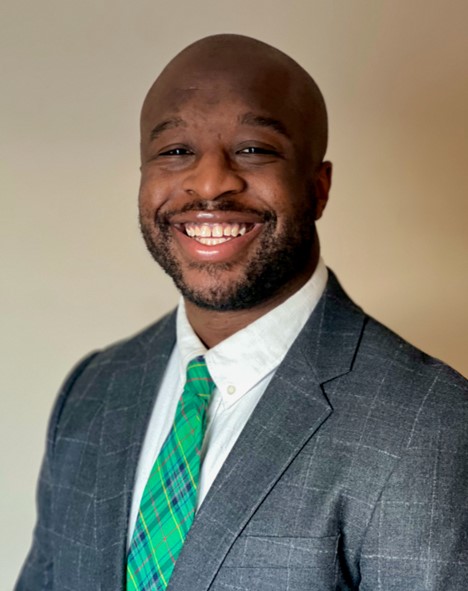
Obinna Nwosu, MD
Mass Eye and Ear
An Integrated, Cost-Effective System for Scalable Temporal Bone Surgical SimulationBiography: Obi Nwosu, MD is a fourth-year otolaryngology resident at Mass Eye and Ear, husband, and father of four with a passion for surgical innovation within otology & neurotology. His research, conducted under the mentorship of Dr. Matthew Crowson, focuses on development of real-time computer vision applications for surgical scene understanding in otologic surgery. He has published several manuscripts on these topics and received multiple awards for his innovative work.
Innovation Description: Our present innovation is focused on the development and validation of a cost-effective system for temporal bone surgical simulation with integrated automated performance assessment. The project merges 3D-printed temporal bone surgical training with a novel computer vision approach for otologic instrument motion analysis and performance assessment. This work represents a shift from time-consuming manual performance assessment in cadaveric training, an alternative to hardware-intensive virtual reality simulators, and serves as a blueprint for future works on automated surgical performance assessment in otolaryngology.
Honorable Mention Award Winners
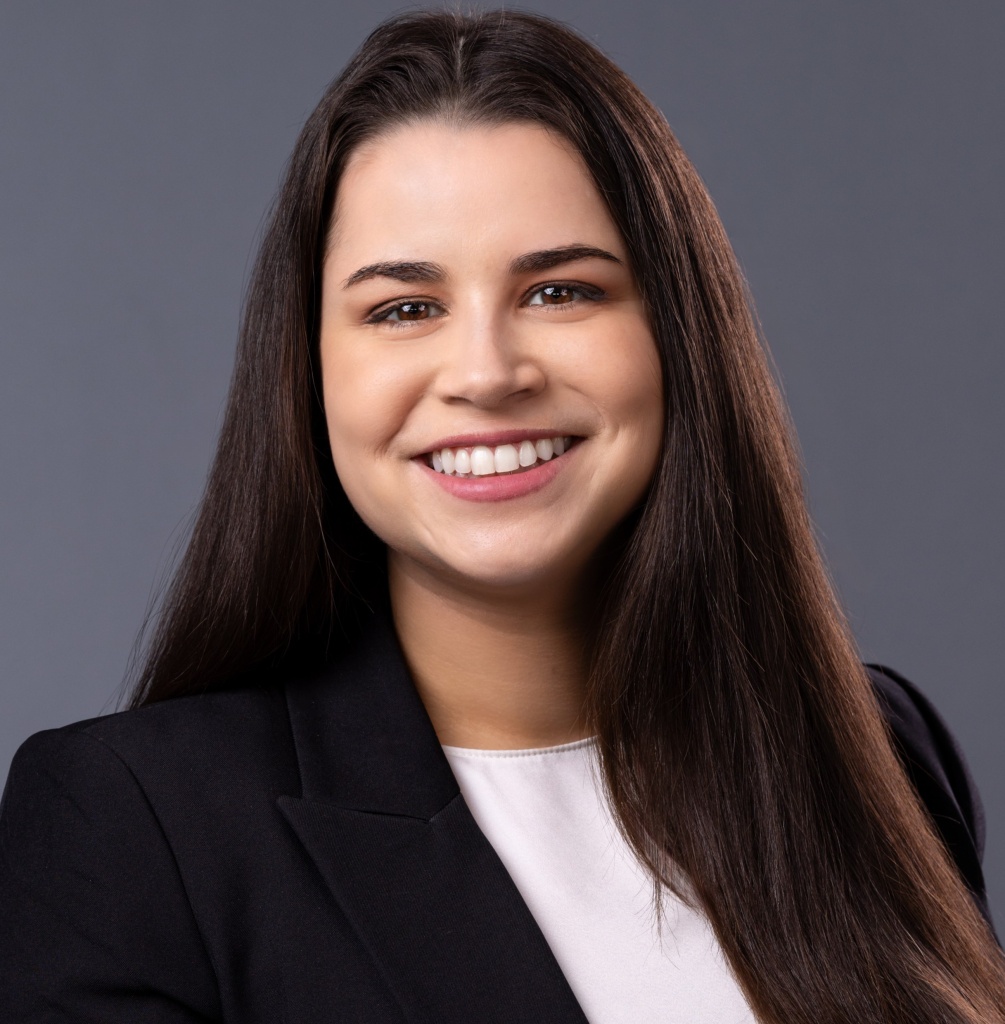
Claudia Guitierrez, MD
University of VirginiaBiography: Claudia Gutierrez, MD, MS, earned her BS/MS in Biomedical Engineering from Drexel University before completing her medical degree at the Mayo Clinic School of Medicine. Currently a chief resident at the University of Virginia, Dr. Gutierrez is dedicated to advancing operating room efficiency and enhancing the patient experience through medical innovation. This summer, she will begin a fellowship in Head and Neck Surgery at the University of Miami.
Innovation Description: Facial plastic surgery often utilizes monitored anesthesia care (MAC) to minimize risks associated with general anesthesia, particularly in high-risk patients, but standard nasal cannulas can obstruct the surgical field, causing delays and increased costs. To address this, we developed the “Adaptive Airway” device, which secures nasal cannula tubing within the patient’s mouth, ensuring continuous oxygen delivery and carbon dioxide monitoring without interfering with surgery. Designed using CAD and 3D-printed with biocompatible materials, the device has been successfully tested in the operating room, demonstrating its effectiveness in improving surgical efficiency and patient safety.
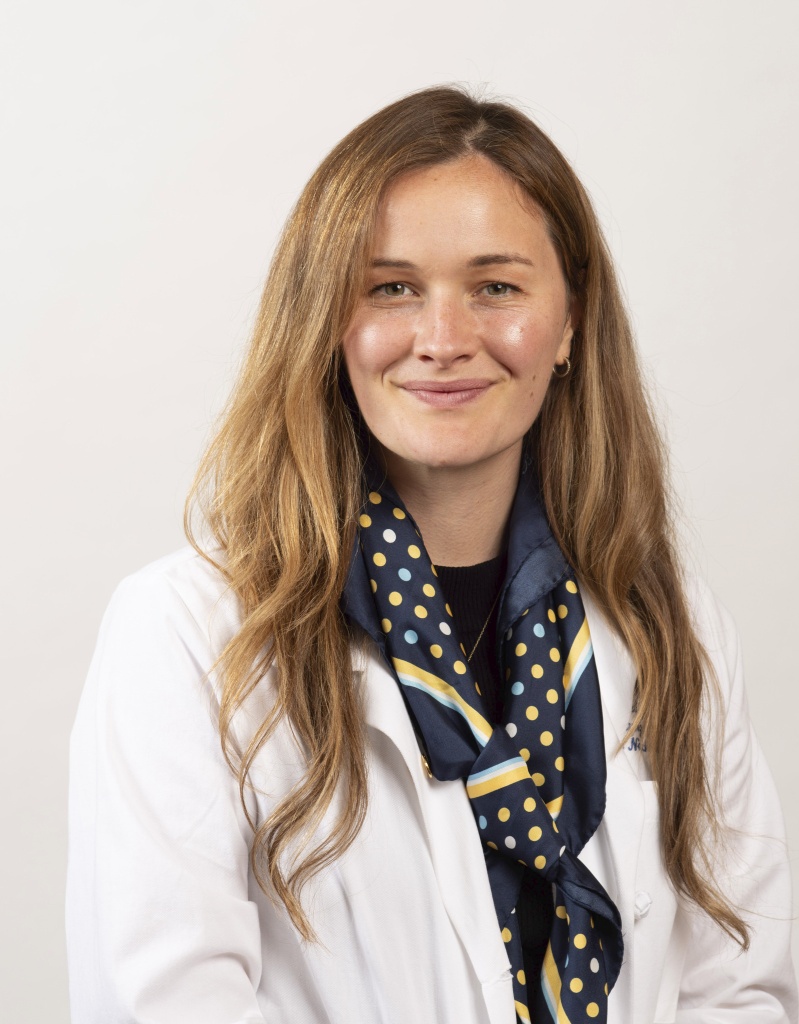
Taylor Erickson, MD
University of California, San FranciscoBiography: Taylor Standiford Erickson is a fourth-year resident physician in Otolaryngology Head & Neck Surgery at the University of California, San Francisco. She has a particular interest in leadership development, medical education, improving the resident match process and health services research. Taylor is planning to pursue a fellowship in rhinology and a career in academic otolaryngology.
Innovation Description: The Otolaryngology-Head and Neck Surgery Leadership Development Program aims to address the gap in formalized leadership training for otolaryngology residents by developing a tailored curriculum focused on non-technical competencies such as team management, communication, and professionalism. Based on a needs assessment and pilot program, the initiative demonstrated significant improvements in resident leadership skills and received over $40,000 in grant funding to support its implementation. With plans to expand to other specialties and programs, this innovation aims to establish sustainable leadership development training across the field of otolaryngology.
-
Congratulations to the winners of this year's Haynes Award for Innovation in Otolaryngology–Head and Neck Surgery! We are delighted to announce that Dr. Amit Walia from Washington University School of Medicine was chosen as our 2nd Annual Haynes Scholar and will join us for a campus visit on April 19, 2024 to present his work as part of our annual Haynes Innovation Symposium.
2nd Annual Haynes Scholar
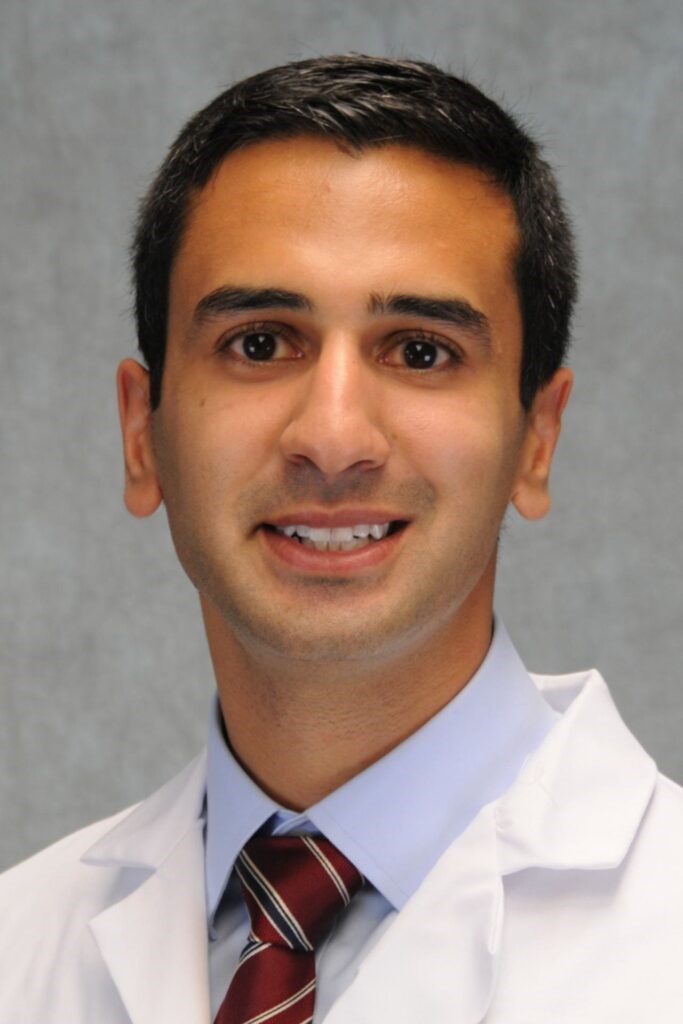
Amit Walia, MD
Washington University in St. Louis
Precision Mapping: Revolutionizing Cochlear Implant Cochlear Implant Programming through ElectrocochleographyBiography: Amit Walia, MD, MSCI, is a fourth-year otolaryngology resident at Washington University School of Medicine, where he completed the T32 Research Training program under the mentorship of Craig Buchman, MD, with his primary research focus on understanding the electrophysiologic responses from the cochlea (i.e., electrocochleography). His research focuses on (1) understanding the underpinnings of how the normal human cochlea functions, (2) predicting performance in cochlear implantation, (3) using the cochlear microphonic as a potential electrophonic microphone, (4) identifying the site of pathology using electrocochleography, and (5) using electrocochleography as a marker of intracochlear trauma to improve hearing preservation in cochlear implantation. He has published several manuscripts in this space and received multiple grants from organizations like the American Hearing Research Foundation, American Academy of Otolaryngology- Head and Neck Surgery and the American Neurotology Society.
Innovation Description: This project has the potential to revolutionize cochlear implant (CI) programming by introducing an individualized approach, using electrophysiologic recordings from live human cochleae to accurately map their tonotopic arrangement. It challenges the conventional use of the Greenwood function, derived from animal and cadaveric studies, by providing a more precise alignment of CI electrodes to specific cochlear regions. This innovative technique has the potential to enhance sound quality, reduce rehabilitation time, and a provide a more naturalistic stimulation of the auditory nerve for CI users.
Honorable Mention Award Winners

Hayley Mann, MD
University of WisconsinBiography: Hayley Mann was born and raised in Phoenix, Arizona and attended Goshen College in northern Indiana where she majored in biochemistry. She graduated from Saint Louis University School of Medicine and is an Otolaryngology resident at University of Wisconsin Hospitals and Clinics. She enjoys running with her dog, traveling, and baking - especially sharing those bakes with her fellow residents.
Innovation Description: The project focuses on providing a safe pregnancy experience for otolaryngology trainees - and truly all surgical trainees. The protocol describes literature-supported guidelines for training programs to implement to ensure the safety of pregnant residents. There is, at present, a lack of pregnancy-related safety measures in place for surgical training programs, and this protocol is designed to be easily adoptable by multiple specialties and programs of all sizes to ensure the safety and wellbeing of surgical residents.
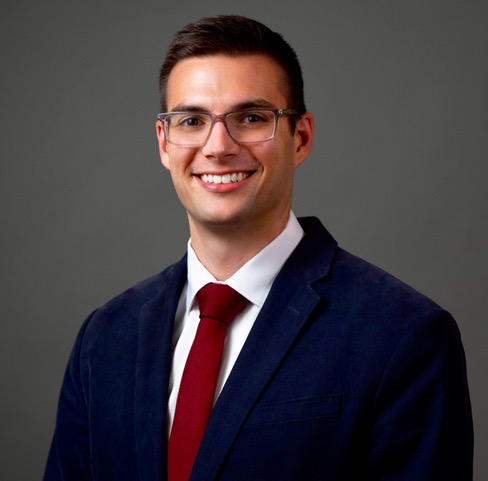
John Marinelli, MD
Brooke Army Medical CenterBiography: Dr. John P. Marinelli, MD is a PGY-5 otolaryngology resident at Brooke Army Medical center in San Antonio, Texas who will begin fellowship training in Neurotology and Lateral Skull Base Surgery at Mayo Clinic in Minnesota upon graduation from residency. He completed his undergraduate training in physics at the United States Military Academy in West Point, New York, and he attended medical school training at the Mayo Clinic Alix School of Medicine in Rochester, Minnesota.
Innovation Description: Dr. Marinelli began development of OtoRecall under the mentorship of Dr. Matthew Carlson during his PGY-2 year in residency. After securing commercial funding, he oversaw the software development and content creation of OtoRecall – an open-access, spaced repetition flashcard app spanning all subspecialties of Otolaryngology-Head and Neck surgery designed for trainees. As of 2024, OtoRecall has accumulated 4,500 international users across over 50 countries, and active expansions of the app are ongoing.
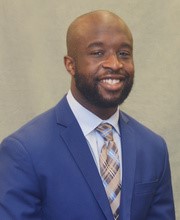
Obinna "Obi" Nwosu, MD
Massachusetts Eye and EarBiography: Dr. Obi Nwosu grew up in Indiana and completed undergraduate and medical school at Indiana University. He is now a 3rd year otolaryngology resident at Mass Eye and Ear. His research interests are in the development of automated systems to increase efficiency and objectivity and improve outcomes in the practice of otology/neuro-otology.
Innovation Description: Our project is a proof-of-concept demonstrating feasibility of AI-driven, automatic detection of middle ear anatomy and instruments. We demonstrate that instruments and select anatomy can be detected in real surgical video data. The model serves as an integral step in the development of an autonomous otologic surgical system.
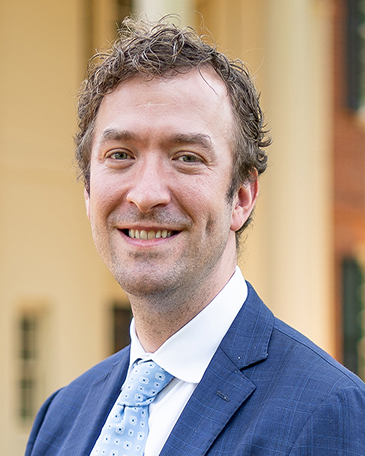
Wesley Stepp, MD, PhD
University or North Carolina at Chapel HillBiography: Dr. Stepp completed his PhD in Microbiology & Immunology through the National Institutes of Health and Georgetown University and attended medical school and residency training in Otolaryngology/Head and Neck Surgery at the University of North Carolina at Chapel Hill. He currently is a PGY-5 resident and works with a multidisciplinary research team at the University of North Carolina developing new molecular techniques to analyze cancers of the head and neck region. Following his fellowship training at the University of Miami, he will continue as a surgical oncologist with the United States Army Medical Corps.
Innovation Description: While head and neck cancers have oft been associated with the consumption of alcohol and/or long-term
cigarette smoking, viral-driven cancers like those caused by the human papillomavirus (HPV) have steadily increased. Our novel cancer-detection technology harnesses how the HPV replicates to identify new HPV-driven tumors, how aggressive these tumors may become and potentially how aggressive multidisciplinary teams need to be when dealing with HPV-driven head and neck cancers. Dr. Stepp and his team are currently working to integrate this technology into established clinical trials to enhance the care of cancer patients in North Carolina.
-
We are delighted to announce that Dr. Lingga Adidharma from the University of Washington was chosen as our inaugural Haynes Scholar and joined us for a campus visit on April 28, 2023 to present her work as part of our inaugural Haynes Innovation Symposium.
Because we had such a tremendous number of outstanding applications, we also added an "honorable mention" category to recognize additional applicants whose innovations had exceptional potential to transform otolaryngology. These applicants also presented their work at the Haynes Innovation Symposium. Read more about these exciting projects below!
Inaugural Haynes Scholar

Lingga Adidharma, MD
University of Washington
Artificial Intelligence for Generating Surgical Highlight ReelsBiography: Dr. Adidharma is currently a PGY2 Otolaryngology resident at University of Washington. She graduated with a degree in Biomedical Engineering at Johns Hopkins University and is passionate about using this background to work in the intersection of Engineering and Medicine. She is a serial innovator developing methods for automated surgical video editing and a more racially accurate pulse oximeter, and she hopes to continue working on more innovations that improve patient care.
Innovation Description: Surgery is a visual specialty, and the status quo of translating hours-long procedures into operative notes consisting of a few paragraphs of text results in the loss of crucial details and context for medical providers. A better alternative to textual operative notes is surgical video highlight reels, however, the labor and time it takes to watch and edit hours of video footage is a major limiting factor to producing them. Dr. Adidharma and her colleagues developed an artificial intelligence software to automate this work, modernizing surgical documentation, and consequently improving how information is communicated between providers. Dr. Adidharma’s has applied for provisional patents and has been awarded a $50,000 grant from the UW CoMotion Innovation Gap Fund for this work.
Honorable Mention Award Winners
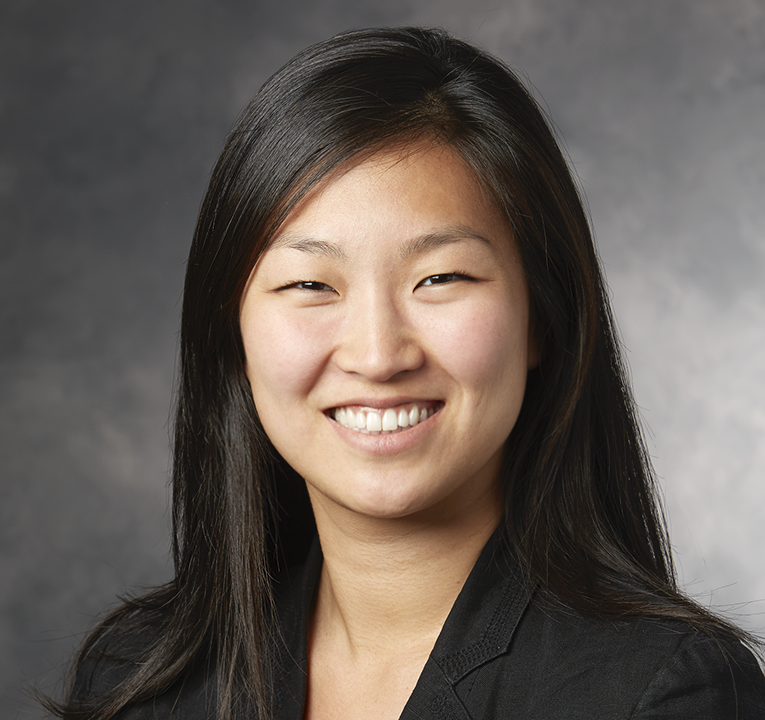
Yu-Jin Lee, MD MS
Stanford UniversityBiography: Dr. Lee is a resident physician in the Clinician Scientist Training Program in the Department of Otolaryngology - Head & Neck Surgery at Stanford. She is interested in conducting clinical trials to improve head and neck surgical outcomes.
Innovation Description: Pre-treatment imaging for head and neck squamous cell carcinoma (HNSCC) is not tumor-specific, leading to detection of incidental lesions requiring unnecessary intervention and delay in treatment. We developed and conducted a clinical trial to evaluate a tumor-specific radiotracer, zirconium-89 panitumumab, to detect HNSCC lesions. We found that the addition of zirconium-89 panitumumab PET/CT scan to the current standard of care using fluorine-18 FDG PET/CT scan led to significantly improved specificity in detection of cancer lesions.
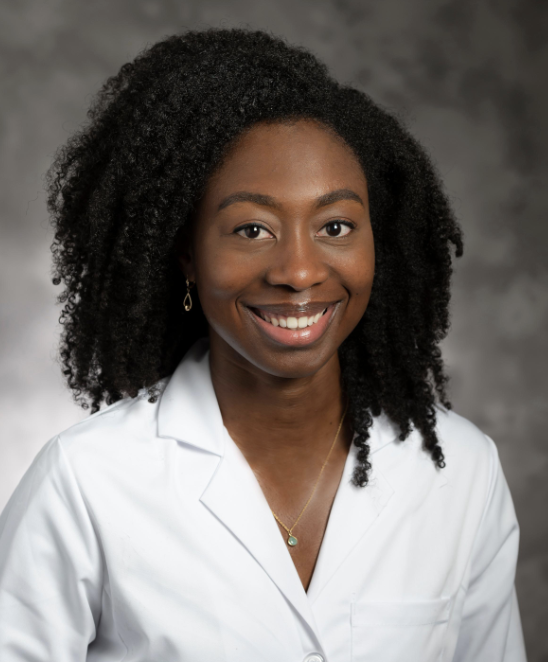
Somtochi Okafor, MD
Duke UniversityBiopgraphy: Dr. Okafor is a Nigerian-American PGY-3 Otolaryngology Head and Neck Surgery resident at Duke University Hospital who grew up in Houston, Texas. She attended the University of Texas at Austin where she majored in Plan II Honors and Latin American Studies, developing a passion for intersecting great health outcomes for all, language, and history. She graduated from the University of Texas Southwestern Medical School and enjoys working out, spending time with family and traveling.
Innovation Description: A resident-initiated program within the Duke Department of Head and Neck Surgery and Communication Sciences to equip the next generation of otolaryngologists with the skills and tools to integrate awareness, knowledge and research into practice to improve the health and health care experience of all patients. The curriculum was developed by Drs. Somtocki Okafor, Rolvix Patterson and Nicholas Frisco under the guidance of Dr. Trinitia Cannon.

Andrew Prince, MD
University of North CarolinaBiography: Dr. Prince is a current PGY-5 UNC ENT resident, NIH T32 Postdoctoral Research Fellow, and CEO/co-founder of LiRA Inc. He grew up outside New Orleans, LA, and went on to complete his education at Spring Hill College (Mobile, AL) and the University of Alabama School of Medicine
Innovation Description: LiRA is developing video-to-speech technology designed to provide immediate, robust lip-reading. Using a smart device, the software looks to mitigate the burden of aphonia following interventions like laryngectomy and tracheostomy. By capturing the voiceless individual attempting speech, and accurately "filling" the soundless words, we aim to ensure all voice is realized. LiRA won the first-place prize in the Covintus Tech Tank pitch competition, a technology-focused accelerator designed to groom startup founders.
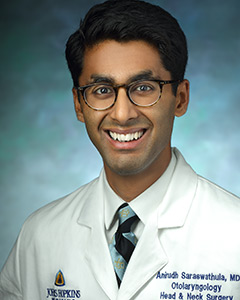
Ani Saraswathula, MD
Johns Hopkins UniversityBiography: Dr. Saraswathula is a fourth-year otolaryngology-head and neck surgery resident at Johns Hopkins in the T32 research track, interested in quality and safety, rhinology, and endoscopic skull base surgery. Originally from Fairfax, Virginia, he attended Stanford University for medical school.
Innovation Description: There is currently no effective free virtual sinonasal anatomy teaching tool for junior residents and medical students allowing learners to manipulate these complex structures in 3D. To address this need, Dr. Saraswathula worked closely with Shirley Li, a talented medical illustration Masters student, her mentor Juan Garcia, and rhinologist Dr. Nicholas R. Rowan to develop an online-compatible fully manipulatable schematic 3D teaching tool of the paranasal sinuses and anterior skull base. This tool will be made available for free download on the public website of the Johns Hopkins Department of Otolaryngology-Head and Neck Surgery and offers a low-cost and highly accessible modality capable of demonstrating complex anatomic relationships to junior trainees learning sinus and endoscopic endonasal skull base surgery.
-
Chair: Alexander Langerman, MD SM FACS – Professor, Head and Neck Surgery
Naweed Chowdhury, MD – Assistant Professor, Rhinology
Austin Hoke, MD - PGY 3 Resident
David Kent, MD – Assistant Professor, Sleep Surgery
Jaclyn Lee, MD – PGY 4 Resident
Christine Little, MD - PGY 2 Resident
Lyndy Wilcox, MD – Assistant Professor, Pediatric Otolaryngology
Logo Design: Rahul Sharma, MD – VUMC Otolaryngology Resident 2021 - 2026
-
Founded in 1986, the modern version of the Vanderbilt University Medical Center Department of Otolaryngology – Head and Neck Surgery has risen to become one of the most influential and progressive programs in the country. From Dr. Robert Ossoff’s early vision, through our substantial growth under Dr. Roland Eavey, to our continued transformation and thought leadership from Dr. Eben Rosenthal, our department chairs have always embraced novel approaches to patient care, trainee education, clinical/translational research, and program development. Situated on the Vanderbilt University campus, our department has also leveraged transdisciplinary collaborations to bring new ideas and expertise to benefit our patients and society. This includes the strong ties our department has as a founding partner in the Vanderbilt Institute for Surgery and Engineering and our faculty collaborations with the Vanderbilt innovation, design and entrepreneurship center, the Wond’ry.